

What the score measures
Completeness compares the bills EnerG expects against the bills it has. It counts every month from a meter’s service start date to the current date. Missing bills, gaps, and overlaps lower the score. Complete, non-overlapping coverage raises it.Meter, building, and portfolio scoring
Completeness rolls up in three layers.- Meter level scores one meter from its service start to today.
- Building level aggregates meter scores across all included meters for the site.
- Portfolio level averages building coverage for the KPI on Portfolio Home.
Include In Metrics setting when a meter should or should not count.
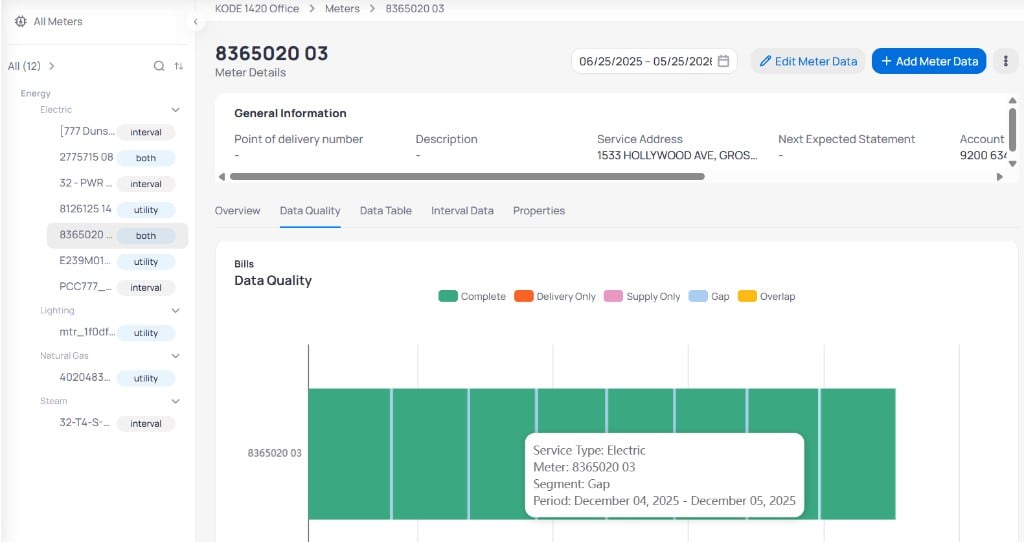
Meter bills data quality timeline with complete periods and gaps
Why completeness gates benchmarking
EnerG only ranks buildings that meet your organization’s completeness threshold. Buildings below the threshold appear with No Ranking until coverage recovers. This rule protects peer comparisons. A building with three missing months would post an artificially low EUI and distort rankings. Completeness holds it out until the data is trustworthy. The same rule applies before you set baselines, train models, or publish reports. Each needs 12 consecutive months of complete data to qualify.Common causes of low coverage
- A utility credential failed, so new bills stopped arriving.
- A meter was assigned late, so early months never loaded.
- A provider issued overlapping or corrected bills.
- A manual meter has no readings for recent months.
Next steps
Fix completeness gaps
Review a meter timeline and work through the gap investigation steps.
Data sources and meters
Review how bills and interval reads enter EnerG and roll into meters.
Alert center
Triage billing gaps, overlaps, and late bills across the portfolio.
Benchmarking and intensity
See how completeness thresholds affect EUI, WUI, and GHG rankings.